

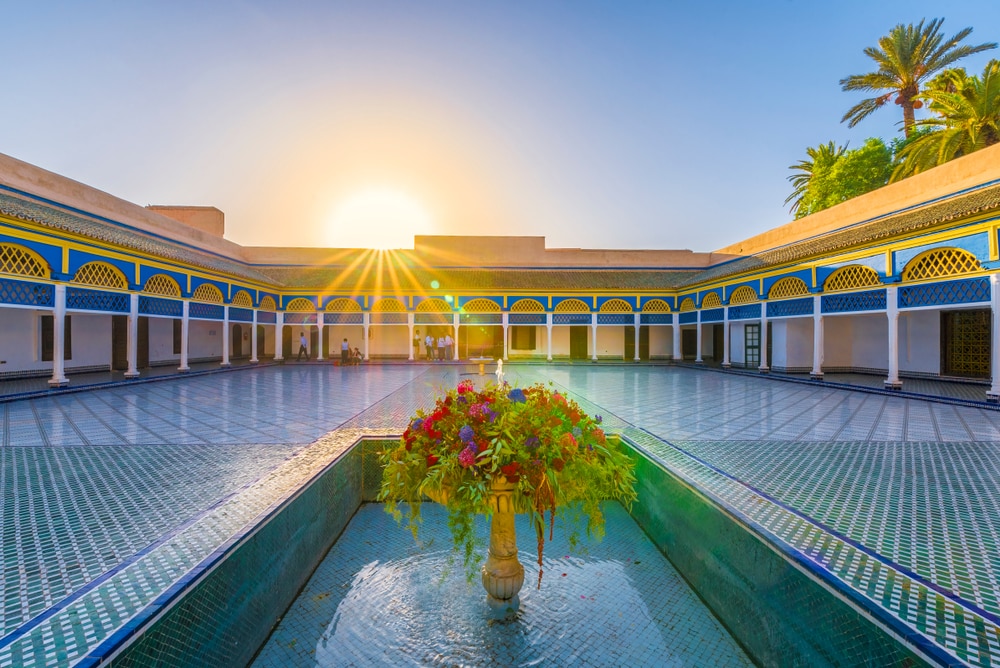

The climate in Morocco is divided in two. In the north and north-west you will find a Mediterranean climate. In the south and south-east, you will find a continental climate due to the influences of the Sahara. Between the two climatic zones is the High Atlas mountain range, where high altitudes bring a different climate with all this together. The higher the mountains, the colder and rainier it becomes. Above 1000 meters, you will even find snow in the Atlas Mountains during the winter months. Meanwhile at low altitudes in places like Marrakech, you will find the weather is much warmer and drier. Temperatures can easily exceed 36 ° C during the summer months of July and August. The further south you go, the colder the climate becomes. In the Sahara regions south of the Atlas Mountains, you will find very hot desert climates with little or no rain. The Mediterranean climates of the northern and northwestern coastal regions are characterized by sunny, dry summers and mild winter weather. The same goes for Marrakech, but due to its semi-arid climate, temperatures are on average higher — temperatures can reach more than 30 ° C.
In order to find the best time to travel to Morocco, it really depends on where you are going. That’s why I’ve been looking for different regions all over the country to help you decide when to go! You will find comprehensive statistics and useful tables as well as recommendations on when to go to Marrakech, Rabat and Western Sahara.
When is the best time to visit Morocco
“ The best time to visit Morocco: April, May, October and November ”
In general, the best time to visit Morocco, no matter where you go, is spring and autumn. In the months of April, May, October and November, climates are comfortable throughout the country and are not too hot. For the northern and northwestern coastal regions, the summer months are also a good time to vacation. Warm temperatures around 26–27 ° C are perfect for beach holidays. If you want to take a tour of Morocco or simply visit the city of Marrakech, then the time between September and May would be the best for that. It is better to avoid the summer months when traveling inland because the climate is very hot and very dry — for some, it can be unbearable. If you head to the territory of Western Sahara, you will encounter a hot desert climate, where summers are absolutely flamboyant. If you travel through the deserts in Morocco, then fall, winter and even the spring months are the best for that, just so you are saved from the high temperatures. The coastal area of Western Sahara is a little sweeter, so the best time to visit here is sometime between April and November. If you go on an adventure in the Atlas Mountains, then the months of March, May, October and November are the best for that. Temperatures during the winter months often fall below the freezing point, not the most ideal conditions for trekking.
Best Time to Visit the Sahara Desert
If you are planning a trip to the Sahara Desert, the most convenient time to do so is in the fall or early spring. This way, you’ll be able to avoid the dry landscapes and torrid temperatures of the summer (averaging around 115 ° F / 45 ° C), and the chilly night temperatures of winter. At any time of the year, temperatures tend to fall after dark, so it’s best to bring a warm jacket, no matter when you plan to visit. Although spring is usually a good time to visit the desert, it is important to remember that the month of April in particular can bring with it the sand storms of the Sirocco wind.
Best time to visit Marrakech
The city of Marrakech, famous for its souks, spices and ancient medina, is truly a fantastic destination for those looking to expand their horizons. During the summer, it hardly rains and the temperatures can be very hot. It is therefore recommended to avoid this time of year, unless you know that you can stand the heat! In my opinion, the best time to visit Marrakech would be in spring and fall. In fact, even during the winter months, the temperatures are higher than those of here, so nothing prevents you from visiting Marrakech at that time. March, April, May and September, October and November offer this golden zone with mild temperatures and little rain. The months of December, January and February are a little cooler, though things can be a little cool at night — nothing that a lightweight jacket can fix. With up to eight days of rain a month, winter is the rainiest season in Marrakech. The best time to visit Marrakech would be from September to May.
Best time to visit Morocco’s coastal
On the meteorological front, the best time to visit Morocco’s beaches is during the summer, when average temperatures around 79 ° F / 26 ° C offer many opportunities to catch a tan (as well as a flight from the intense heat of the interior of the country). ). The sea temperatures are also warmest during this time of the year, with the average water temperature for July being recorded at 70 ° F / 20 ° C. However, summer is also the peak tourist season So be sure to book well in advance — especially if you plan to visit hot spots like Essaouira or Agadir.
0 Comment